Category Archives: Science & hacking

AI is coming to design and engineering

There is one thing in life that you can count on: AI is going to be bigger and happen sooner than almost any of us expect.

Autonomous cars are perhaps the most visible implementations of AI, but it’s creeping in everywhere.  From personal assistants (Sirri, Cortana, Alexa etc), to administration jobs (IBM’s Watson), and now – design and engineering.  Have a look at this article about a team who have applied machine learning to automotive design:

http://www.drive.com.au/motor-news/how-artificial-intelligence-could-design-your-next-car-20170228-gumxy6.html

From the article:

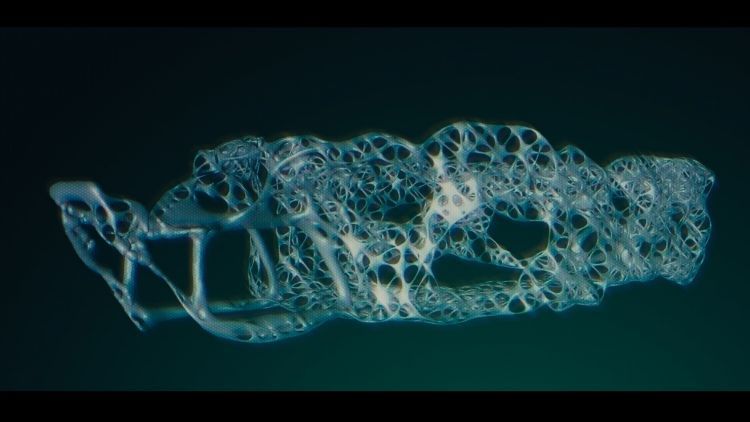
The first Hack Rod prototype created using generative design resulted in a chassis that is 35 per cent lighter than the team’s engineers first managed.

Just let that sink in: on its first try the AI software managed to reduce the weight of a human designed chassis by 35%.

That is unbelievable.  Gains of a few percentage points are what you expect in professional design and manufacturing.  Not 35%.  And this isn’t a design that you can look at and say “Well, ok, now that I have seen it, I could do it too”.  No, this is design that is entirely beyond human ability to ever conceive.

As a deisgner that’s scary – and amazing.

For now we are still in charge of this process.  Controlling and guiding every aspect of it.  However, I can easily imagine a time in the future when an entirely automated, AI guided system can design, build, and operate a fleet of autonomous vehicles, continually monitoring the performance data of the fleet to optimise the physical performance, the satisfaction level of customers to optimise the aesthetics and comfort, and tweaking each new batch of 3D printed cars to improve over the last batch.  No human guidance necessary.

And this isn’t some nebulous, far future, pie-in-the-sky idea.  The pieces are coming together to make this possible very, very quickly.  The McLaren Technology Group already know how to monitor and analyse vehicle performance to the Nth degree.  Market research and analysis of consumer behaviour is what every single company on earth does to some degree or other.  The only missing bit is for AI to tie all of these function together.

The consequences of such a system – economic, social, and political are literally unimaginable at this time.

But the writing is on the wall.  It’s coming.  It’s not going to be stopped.
Sports locker lock fix up

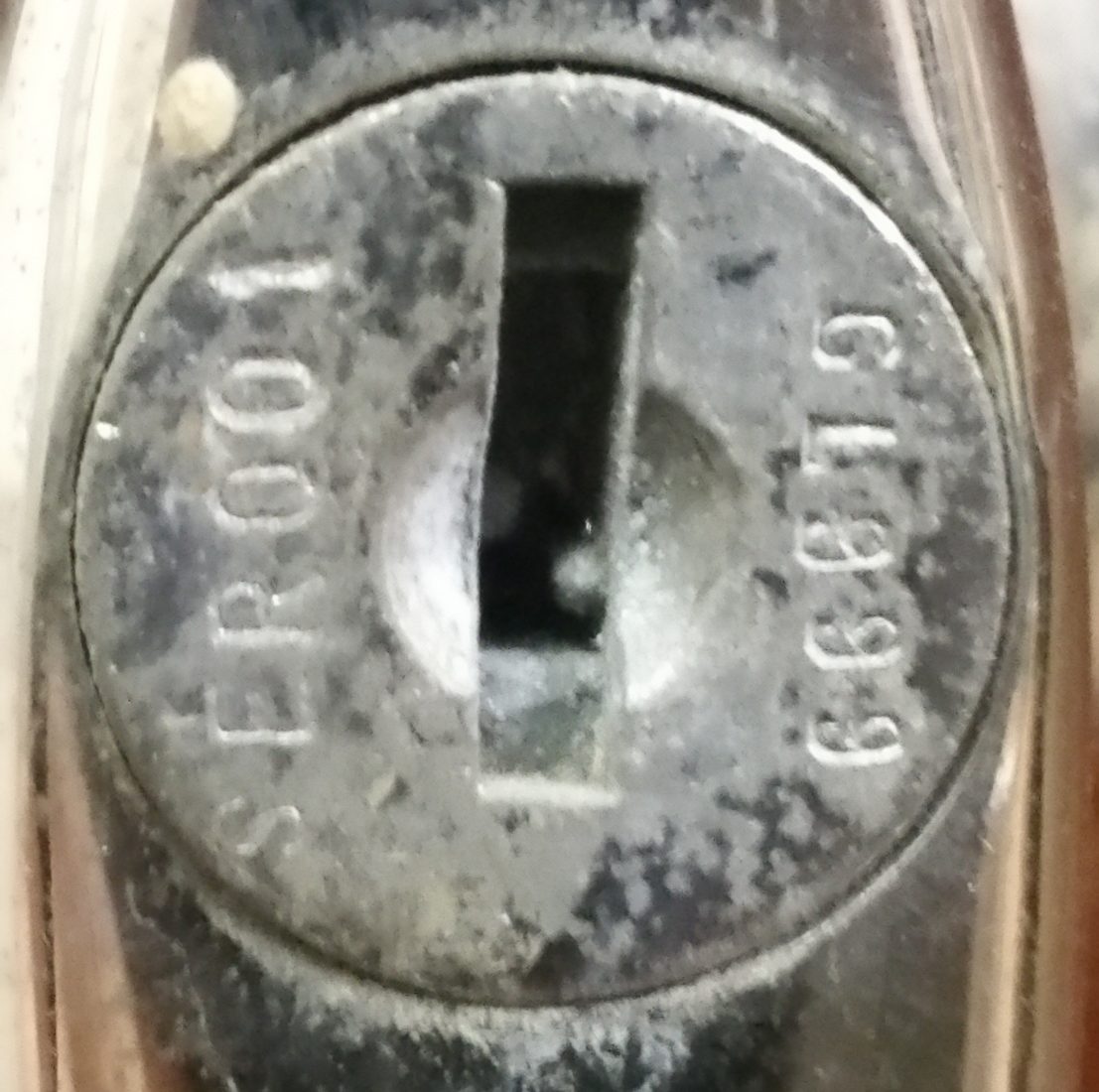
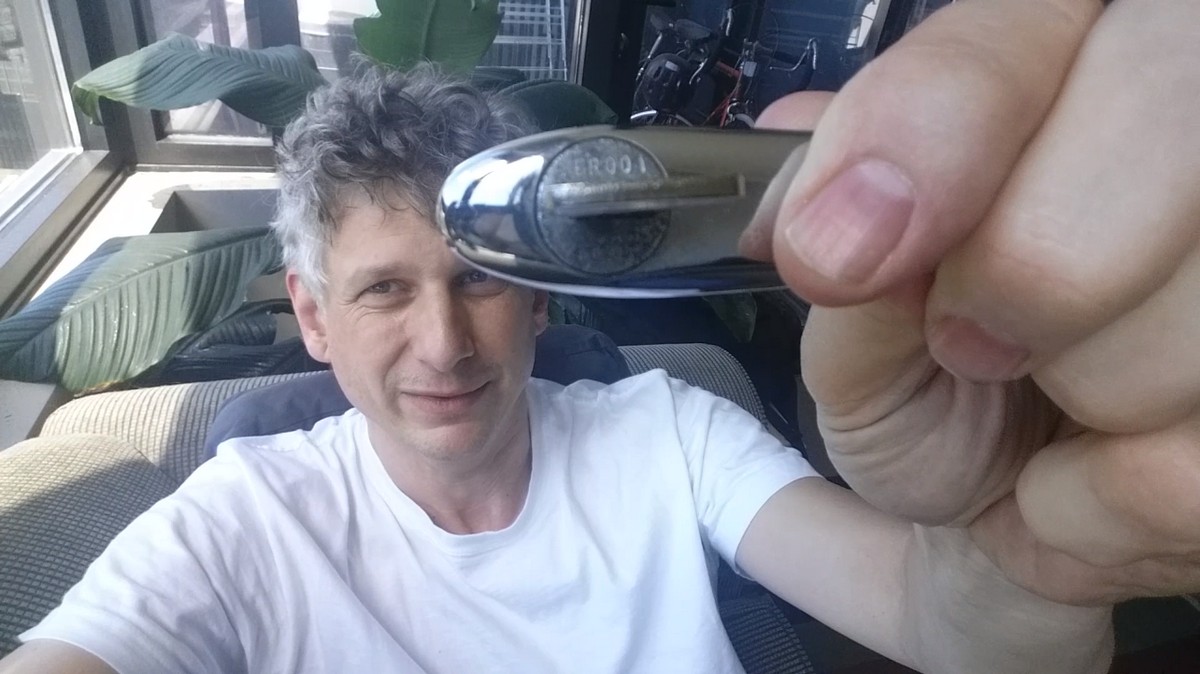
lockI am lucky enough to have a locker at the Men’s Shed that I am a member of.  However, the lockers there are all old and second hand and all missing their keys.  So they aren’t really safe to store valuables in.  I wanted a key for my locker, so I thought I would get one cut.

Initially I just took this photo of the front of the lock to [many] locksmiths and asked them to cut a key.  I have heard that locksmiths have access to vast databases of key codes and all you should have to do is provide a code and they should be able to work out which blank and which pattern to cut on it.

However, none of them could figure it out.  So I decided to pull the whole handle from the locker and see if they could work it out from that.

The following video tells the story – including my foray into lock picking because, why not?

[su_youtube_advanced url=”https://youtu.be/nz9hOvF8piM” responsive=”no” width=”900″ height=”600″  autohide=”yes” rel=”no” theme=”light”]

Science experiment: biphasic sleep

Intro:

This comes very much in the category of something to “do” rather than make.  But it may well help with the “making” in due course.

If you haven’t read my posts about biphasic sleep, you can see them here and here.  In short, biphasic sleep means sleeping in two blocks, with a period of low activity wakefulness in between.  It is suggested by researcher Jessa Gamble that this is the sleep pattern that humans evolved with and that our brains and bodies can benefit from it.  People who have tried it report having “never felt so awake [during the day]” while following it.

You can see Jessa’s TED Talk about it here.

So I thought that I would try it out and see how it might work for me.  To that end I am going to make a Sleep Diary here on this site and record how I feel after different styles of sleep.  My work interferes with by ability to do biphasic sleep for an extended period, so I will just do what I can.

Aim:

To test if biphasic sleep results in:

  • Better rest
  • Greater day time alertness and acuity

Hypothesis:

I believe that my biology is well suited to biphasic sleep, as I am often drowsy early in the evening, then more awake after midnight, before becoming sleepy again.

Equipment:

I may implement my Midnight Clock in due course.

Procedure:

On any night that I can, I will attempt to go to sleep in a biphasic cycle, starting somewhere around 8.00pm, aiming to wake around midnight, then sleep again from approximately 2.00am.  I will maintain a sleep diary to record my physical response.

Safety/risks:

None known.  If I begin suffering sleep deprivation, then I will stop the experiment

Results:

See Sleep Diary for ongoing results

Discussion/observations:

TBA

Conclusions:

TBA

The Midnight Clock – 1

I love sleep. I really love a good long sleep and waking feeling well rested. It’s not the easiest thing to do though these days. Our lives are so busy, there are so many demands and temptations to stay up late and get up early. As the Bon Jovi song goes: “Until I’m six feet under / Baby I don’t need a bed / Gonna live while I’m alive / I’ll sleep when I’m dead…”

I love staying up late, and often find that I am very productive between midnight and 2.00am. However, since I almost inevitably wake up around 7.00am this limits my sleep to only five hours a night. Not enough for me. I really like seven to eight hours.

All in all it makes it difficult to get enough sleep and most importantly quality sleep. So when I recently saw this TED talk by Jessa Gamble about “biphasic sleep”, I was immediately captivated by the idea. Jessa’s research suggested that human beings evolved not to sleep the whole night through, but to sleep in two portions. One early in the night, the other a couple of hours later. The gap being filled by low level activity like talk, sex, reading etc.

You can read a longer article about Jessa’s work here:

http://magazine.utoronto.ca/feature/jessa-gamble-circadian-rhythm-chronobiology-seasonal-affective-disorder-polyphasic-sleep/

This style of sleep appeals to me strongly I am often tired in the early evening and ready for a sleep, but I force myself to stay up until later so that I will sleep right through and (hopefull
y) not wake up. But it’s a Catch22, since when I get to 11.00pm or midnight, I start to wake up again and feel active. That leads to me sometimes staying up too late researching an idea, or doing something else and then not getting enough sleep.

Biphasic sleep seems like the ideal answer – sleep for a while early in the evening when I am tired from a hard days work, wake up for a couple of hours and enjoy that uniquely quiet and peaceful time in the middle of the night, then drift off back to sleep again and sleep until dawn. It seems to suit my circadian rhythm really well.

So I decided to try it out. I have had two nights of early to bed with short periods of being awake in the middle of the night (which surprisingly) just happened naturally – I woke up around midnight without and prompts, and then drifted off to sleep again around 2.00am.

The only problem was that when I woke up, I had no idea what time it was and I found turning over and looking at the clock disturbing. I really didn’t want to do it. This lead me to thinking about a new project – something that I have dubbed The Midnight Clock.

The Midnight Clock would (as the name suggests) turn on around midnight. I would not however be harsh and bright, it would be a soft light that would gradually increase in brightness (to perhaps the intensity of a 10 watt incandescent globe) over the course of about 20 minutes, then hold that brightness until about an hour and ten minutes, at which point it would slowly fade away over the course of half an hour to nothing.

If I was very tired and just wanted to sleep, this “clock” would not wake me up, nor would it keep me awake. But it would be a direct indication of the time if I happened to wake up and wonder. If it’s fully dark, that’s ok, go back to sleep. If it’s getting lighter, then it’s ok to wake up more…

I am thinking that LEDs (warm white, or RGB which I could tune to an orange/red part of the spectrum) would be ideal, driven by an Arduino board to handle the light level and timing. The Adruino would be capable of driving the LEDS without needing a separate power supply and pulse width modulation (PWM) hat or add on, so the system would be simple and compact.

I am going to put this project on my list for the near future. It’s a good little one day Quick Project and would be a nice addition to my on going science experiment with sleep.


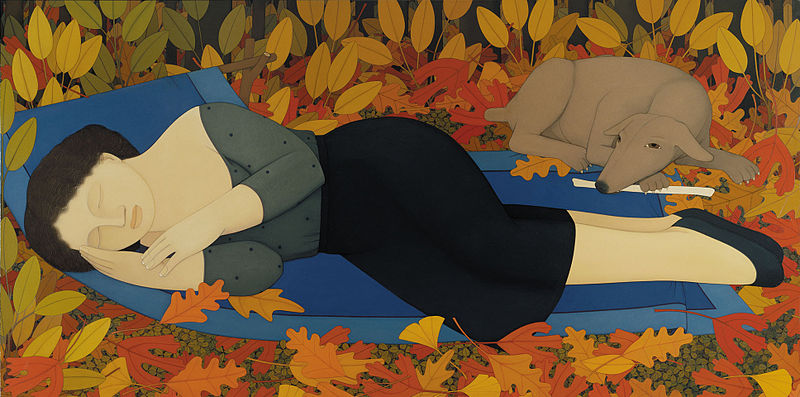
The image attached to this post is an oil painting by Andrew Stevovich, Woman with Autumn Leaves, 1994, 36″ x 72″, Private Collection
from: https://commons.wikimedia.org/wiki/File:Andrew_Stevovich_oil_painting,_Woman_with_Autumn_Leaves,_1994,_36%22_x_72%22.jpg

Fuel level sender unit examination

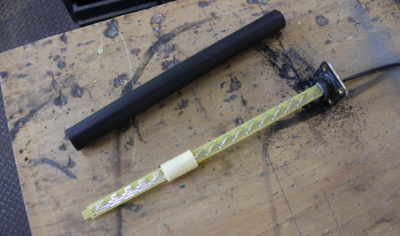
The fuel light on my motorcycle (a Triumph Dayton 955i) came on recently and steadfastly refused to go off, even with a full tank of fuel.

My mechanic swapped it out for a new unit and gave me the old one to play with.  I have often wondered exactly how a fuel sender unit works, so I took it apart and investigated.

[su_youtube_advanced url=”https://youtu.be/3n56y_591iI” responsive=”no” width=”900″ height=”600″  autohide=”yes” rel=”no” theme=”light”]

Science experiment: aluminium foil heat conduction test

Intro:

One of the projects I am planning (the design and construction of a heat recovery and ventilation system) requires a membrane that efficiently transfers heat from one body of air to another.

I am planning to use regular household aluminium foil for this. It has a lot of things in its favour including

Note: I have recently decided that the heat recovery unit will probably use copper foil instead since copper has roughly double the conductivity of aluminium and I can get it in foil only 50% thicker than kitchen foil.

  • It’s cheap
  • Readily available
  • Aluminium is a very good conductor
  • Cheap foil is very thin (usually a problem when you want to use it to wrap something!) so have very little mass, which should allow freer flow of heat from one side to the other

Aim:

To determine if the reflective quality of aluminium foil (which makes it so effective as insulation in buildings and “space blankets”) decrease it’s performance in this application

Hypothesis:

I expect that since the main mechanism of heat transfer in the heat exchanger is conduction, that the reflective nature of the foil will make little difference to overall performance

Equipment:

  • Aluminium kitchen foil
  • Matt black automotive primer
  • Cardboard
  • Tape
  • Infrared thermometer
  • A cold window

Procedure:

  1. Take two pieces of foil, each approximately fourth centimeters meter long, paint one black on both sides, leave the other unpainted
  2. Using cardboard, make a support frame that will hold the foil by the edges, side by side, approximately 20mm away from the window
  3. Tape both pieces of foil to the frame – ensure that the foils don’t touch to prevent any heat conduction between the foil sheet
  4. Tape the cardboard frame to the cold window
  5. Measure the temperature of each sheet of foil with the infrared thermometer

Using a window is ideal as it will simulate the actual indoor/outdoor temperature differences that will be found in the heat recovery ventilator.  Performing the experiment at night, or on a cloudy day would be ideal so that sunlight can’t heat the foil and skew the results.

Safety/risks:

  • Use spray paint in a ventilated area

Discussion/observations:

TBA

Conclusions:

TBA