The brief phoenix of driving for Uber

I love – and hate – the idea of self driving cars.  I hate it because I love driving, and I can see a time in the future where I won’t physically be allowed to drive on public roads – or at the very least won’t be able to get the insurance that allows me to self-drive.

I love it because it’s going to make driving so much safer.  The cost to individuals and society of car crashes is huge, financially, physically, and emotionally.

But there is also going to be another cost – that’s to taxi drivers and the people who drive for Uber.  That industry, given a little more time, will simply cease to exist.  It won’t be a gradual decline.  Once the technology is mature, Uber itself will transform from a company that pays people to do ride sharing to a company that provides cars (it may rent your self-driving one from you perhaps), but ultimately the notion of YOU having a car isn’t going to endure.

So everyone who drives a taxi, or for Uber is going to lose their job, because you can bet that the day taxi companies can put a car on the road without a driver, then they will.  In any business the people involved are always the most expensive and troublesome part.  It’s the old IT cliche: “The systems would be perfect if it weren’t for the users”.

Self-driving cars mean no more “users”.  Once you do away with the drivers, the entire eco-system of car ownership and use changes.  Transport as a service is the future.  And the future is officially here:

http://www.skynews.com.au/tech/techinnovation/2016/08/27/self-driving-taxis-released-in-singapore.html

This is the other shoe dropping.  Singapore have done it – they have self-driving taxis.  This will open the flood gates.  Give it a little time for everyone else to see what happens, and if it works without major drama, then governments the world over will be besieged by lobbyists wanting access.

It will be a whole new industry ready to be born, with lots of money to be made.

And all the cabbies out there, what of them?  They will have to hang up their caps and their ID cards and move on to something else.  What?  I have no idea.  Which is sad, because self-driving cars are only the beginning.

Science experiment: biphasic sleep

Intro:

This comes very much in the category of something to “do” rather than make.  But it may well help with the “making” in due course.

If you haven’t read my posts about biphasic sleep, you can see them here and here.  In short, biphasic sleep means sleeping in two blocks, with a period of low activity wakefulness in between.  It is suggested by researcher Jessa Gamble that this is the sleep pattern that humans evolved with and that our brains and bodies can benefit from it.  People who have tried it report having “never felt so awake [during the day]” while following it.

You can see Jessa’s TED Talk about it here.

So I thought that I would try it out and see how it might work for me.  To that end I am going to make a Sleep Diary here on this site and record how I feel after different styles of sleep.  My work interferes with by ability to do biphasic sleep for an extended period, so I will just do what I can.

Aim:

To test if biphasic sleep results in:

  • Better rest
  • Greater day time alertness and acuity

Hypothesis:

I believe that my biology is well suited to biphasic sleep, as I am often drowsy early in the evening, then more awake after midnight, before becoming sleepy again.

Equipment:

I may implement my Midnight Clock in due course.

Procedure:

On any night that I can, I will attempt to go to sleep in a biphasic cycle, starting somewhere around 8.00pm, aiming to wake around midnight, then sleep again from approximately 2.00am.  I will maintain a sleep diary to record my physical response.

Safety/risks:

None known.  If I begin suffering sleep deprivation, then I will stop the experiment

Results:

See Sleep Diary for ongoing results

Discussion/observations:

TBA

Conclusions:

TBA

The Midnight Clock – 2

I have had some further thoughts about the design for the Midnight Clock and wanted to jot them down.

Functionality:

  • Doesn’t turn on at a set time
  • Turns on four hours after its “biphasic” button is pushed
  • Could use two short strips of warm white LED stuck back to back which would allow it to be inserted into an existing lamp like the (decorative) salt lamp that I have
  • Should have a second button that just turns it on and off so that it can also work as an ordinary lamp
  • Should have a dial to adjust brightness in either mode
  • The control box would sit in line between the AC power supply and the LED output
  • The control box could be decorative – I am thinking early twentieth century art deco, phenolic resin radio style
    See: https://www.google.com.au/search?q=art+deco+radio&espv=2&biw=1280&bih=639&source=lnms&tbm=isch

All of this suggests an Arduino controller and I happen to have one kicking around!

Ads, ad blockers and a totally awesome discovery

I include Google ads in this site to generate some income from my project work and the effort of documenting it.  Now, many of you are probably running ad blocking software in your web browsers – I certainly do, so I don’t blame you if you do.

However I learned something important tonight: Google can sometimes serve up some freaking awesome ads!

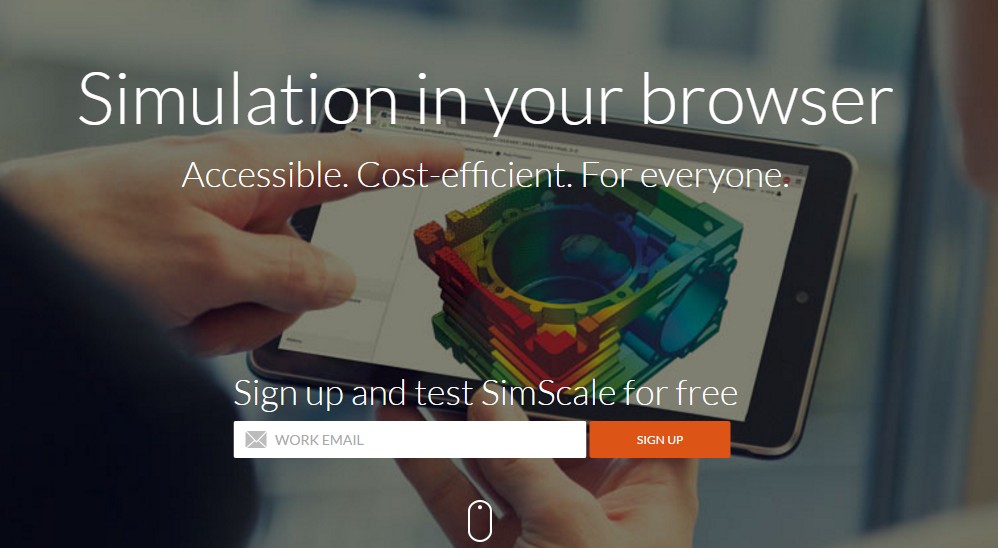
I am still working on eliminating the personal dating ads (I have managed to kill the awful weight loss ones!), but while testing my site, I discovered that there was an ad for a website called Simscale.

Disclaimer: I have nothing to do with Simscale and have not been paid or induced to endorse them in any way.

I just think that the service that they offer is frickin awesome.

Simscale (https://www.simscale.com/) is a cloud based simulation service that can perform fluid dynamics analysys, finite element analysis (stress analysis), and thermodynamic analysis of your project.  You upload your 3D model, configure the simulation (non-trivial, but doable), and their cloud system computes the results for you.  You can pay for the computer time to keep it private, or make it a public project and they will do the computation for free!  That is a seriously good deal.

Designing a piece of machinery, or a tool and want to know if the design is robust enough?  Simscale can tell you where the points of failure will likely be.  Want to simulate the airflow in a building (or through a heat recovery system) – Simscale can tell you what will happen.

When I studied industrial design over twenty years ago, this sort of analysis was vastly expensive and mentioned only in passing by our lecturers.  Now days, it’s completely commoditised and accessible to just about anyone with and internet connection, 3D modeling software, the inclination to learn some new skills, and a few hours.

Any way you look at it, this is an amazing service – and one that I am seriously contemplating using with my projects.

The Midnight Clock – 1

I love sleep. I really love a good long sleep and waking feeling well rested. It’s not the easiest thing to do though these days. Our lives are so busy, there are so many demands and temptations to stay up late and get up early. As the Bon Jovi song goes: “Until I’m six feet under / Baby I don’t need a bed / Gonna live while I’m alive / I’ll sleep when I’m dead…”

I love staying up late, and often find that I am very productive between midnight and 2.00am. However, since I almost inevitably wake up around 7.00am this limits my sleep to only five hours a night. Not enough for me. I really like seven to eight hours.

All in all it makes it difficult to get enough sleep and most importantly quality sleep. So when I recently saw this TED talk by Jessa Gamble about “biphasic sleep”, I was immediately captivated by the idea. Jessa’s research suggested that human beings evolved not to sleep the whole night through, but to sleep in two portions. One early in the night, the other a couple of hours later. The gap being filled by low level activity like talk, sex, reading etc.

You can read a longer article about Jessa’s work here:

http://magazine.utoronto.ca/feature/jessa-gamble-circadian-rhythm-chronobiology-seasonal-affective-disorder-polyphasic-sleep/

This style of sleep appeals to me strongly I am often tired in the early evening and ready for a sleep, but I force myself to stay up until later so that I will sleep right through and (hopefull
y) not wake up. But it’s a Catch22, since when I get to 11.00pm or midnight, I start to wake up again and feel active. That leads to me sometimes staying up too late researching an idea, or doing something else and then not getting enough sleep.

Biphasic sleep seems like the ideal answer – sleep for a while early in the evening when I am tired from a hard days work, wake up for a couple of hours and enjoy that uniquely quiet and peaceful time in the middle of the night, then drift off back to sleep again and sleep until dawn. It seems to suit my circadian rhythm really well.

So I decided to try it out. I have had two nights of early to bed with short periods of being awake in the middle of the night (which surprisingly) just happened naturally – I woke up around midnight without and prompts, and then drifted off to sleep again around 2.00am.

The only problem was that when I woke up, I had no idea what time it was and I found turning over and looking at the clock disturbing. I really didn’t want to do it. This lead me to thinking about a new project – something that I have dubbed The Midnight Clock.

The Midnight Clock would (as the name suggests) turn on around midnight. I would not however be harsh and bright, it would be a soft light that would gradually increase in brightness (to perhaps the intensity of a 10 watt incandescent globe) over the course of about 20 minutes, then hold that brightness until about an hour and ten minutes, at which point it would slowly fade away over the course of half an hour to nothing.

If I was very tired and just wanted to sleep, this “clock” would not wake me up, nor would it keep me awake. But it would be a direct indication of the time if I happened to wake up and wonder. If it’s fully dark, that’s ok, go back to sleep. If it’s getting lighter, then it’s ok to wake up more…

I am thinking that LEDs (warm white, or RGB which I could tune to an orange/red part of the spectrum) would be ideal, driven by an Arduino board to handle the light level and timing. The Adruino would be capable of driving the LEDS without needing a separate power supply and pulse width modulation (PWM) hat or add on, so the system would be simple and compact.

I am going to put this project on my list for the near future. It’s a good little one day Quick Project and would be a nice addition to my on going science experiment with sleep.


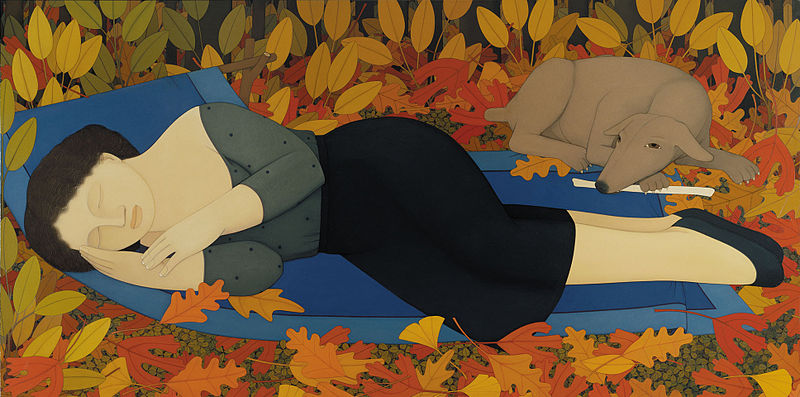
The image attached to this post is an oil painting by Andrew Stevovich, Woman with Autumn Leaves, 1994, 36″ x 72″, Private Collection
from: https://commons.wikimedia.org/wiki/File:Andrew_Stevovich_oil_painting,_Woman_with_Autumn_Leaves,_1994,_36%22_x_72%22.jpg

Motorcycle helmet HUD – 3

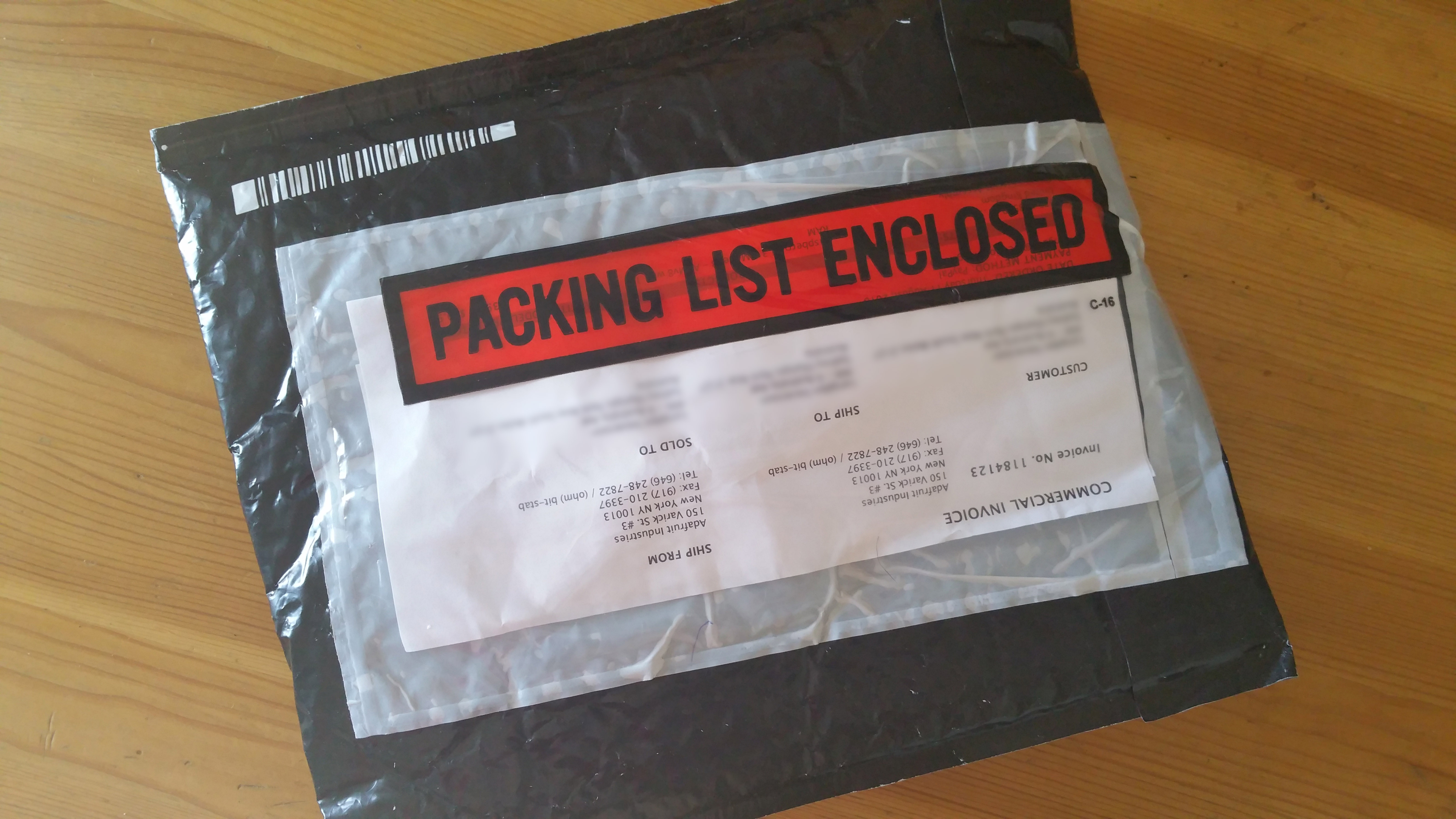
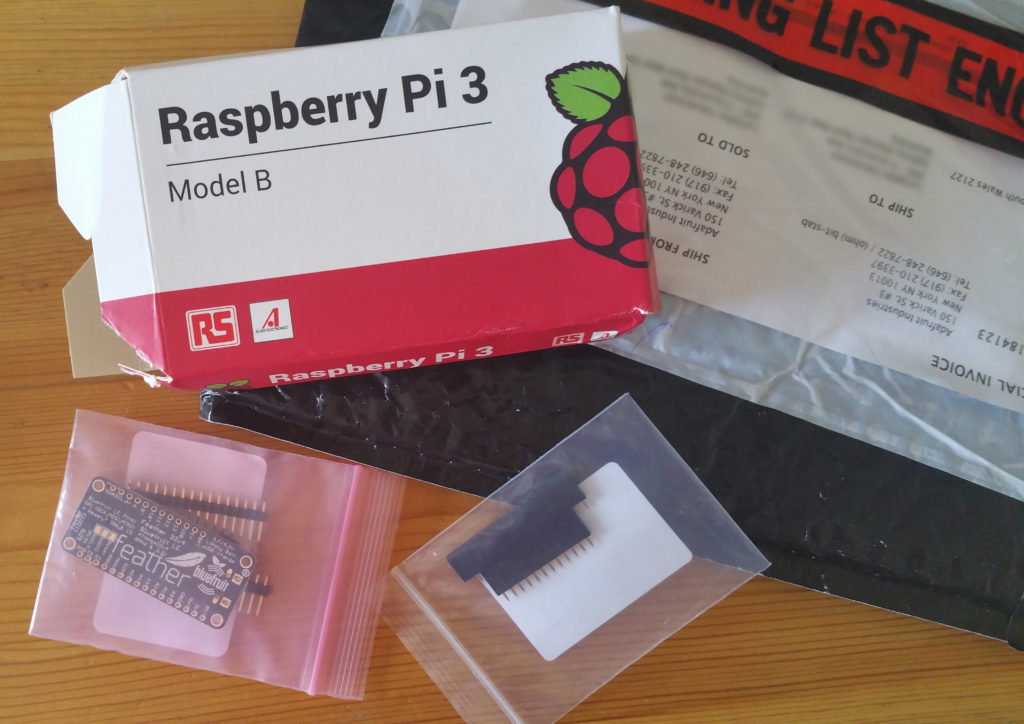
2016-08-23 08.26.00I may still be waiting for my 3D printer to arrive, but in the mean time, the components for my HUD were waiting in the mail box today!
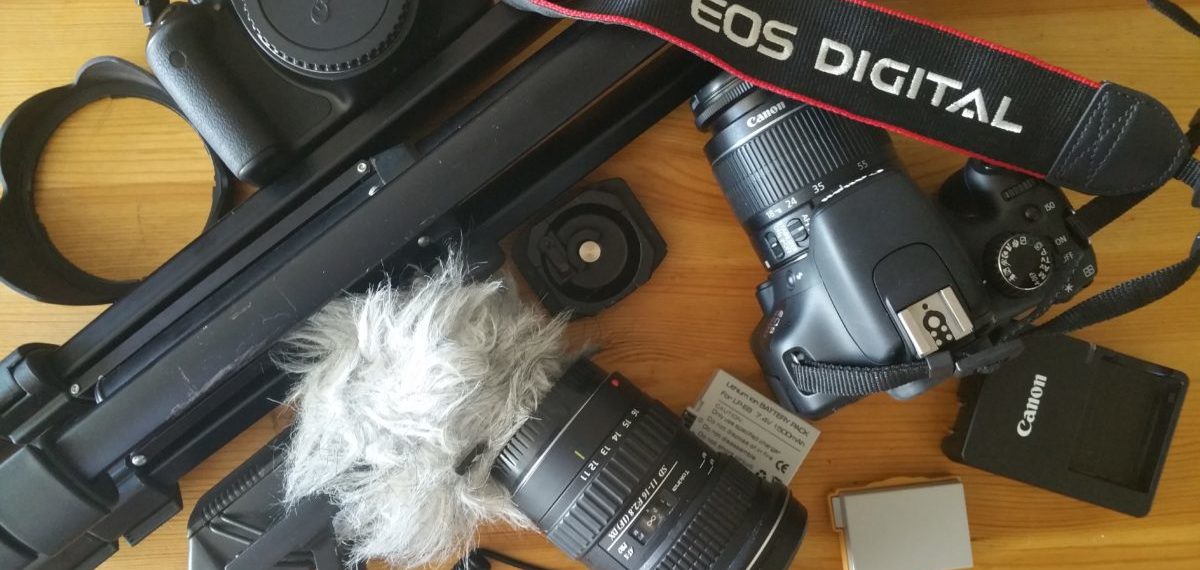
It included a Rasberry Pi model 3 B, an Adafruit Feather Bluefruit (bluetooth enabled Feather development board) and some headers for the Bluefruit.

So now I’m ready to push forward with this project and get the electronics finalised.  Once the 3D printer arrives, then I can start working on housings for the electronics.  Lots to plan and lots to do!


The Howto Howto

Over a couple of decades the distilled wisdom of my family’s experience of hosting Christmas for our relatives has been collected in a notebook that has become known as The Christmas Book.

It contains pearls of wisdom like: “Light the kettle BBQ at 8.15am for turkey to start cooking at 9.00am, for 1.00pm lunch” (yes, we usually have a monster turkey (boned and rolled and stuffed with a few boned and rolled chickens, and the thing takes at least three hours to roast!).

Or: “Prepare glazed sweet potato ahead of time. Reheat early Christmas day, then wrap in beach towels and put in bed under covers to keep warm until lunch is ready to serve” (yes this really works – with sweet potato and other things – and it helps a lot to relieve congestion and gridlock when you only have one oven to work with!).

The point is that it never hurts to have a reminder when we are doing things that – while significant – we don’t do regularly enough to have a clear memory of all the pitfalls and potential problems.

For me with TtM&D, making a “How To” video is similar. Shooting video is easy. Shooting very good video that clearly tells the story is a much more complex problem. There’s a reason after all why professional production crews have lots of people, each with their own job to attend to. Just because you are only one person filming something doesn’t diminish the complexity of the task, it just means that it’s all on you to get right!

To that end I am going to write and publish Howtos for the things that I do to create material for TtM&D and post them (see the Resources menu), who knows, they might be useful for you as well, either directly, or as a starting point for your own memory aids.

On the list so far:

  • Making video
  • Sound recording with video
  • Making 3D models
  • Audio recording

Fuel level sender unit examination

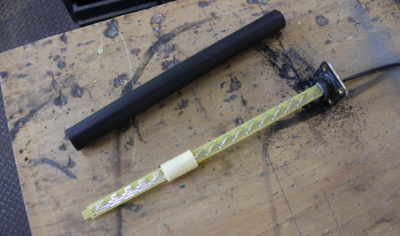
The fuel light on my motorcycle (a Triumph Dayton 955i) came on recently and steadfastly refused to go off, even with a full tank of fuel.

My mechanic swapped it out for a new unit and gave me the old one to play with.  I have often wondered exactly how a fuel sender unit works, so I took it apart and investigated.

[su_youtube_advanced url=”https://youtu.be/3n56y_591iI” responsive=”no” width=”900″ height=”600″  autohide=”yes” rel=”no” theme=”light”]

Motorcycle land speed record attempt

There is something about Englishmen and going REALLY fast.  They seem to be very good at it.  Both the engineering involved in building land speed record cars and driving them.

The current land speed record is held by Andy Green, driving the ThrustSSC (that’s: SuperSonic Car) and yes, ThrustSSC did break the sound barrier on land on four wheels with an average speed over one mile in two passes of 1227.986 km/h.  Any way you look at it, that’s insanely fast.

Not content with that, Richard Noble, who lead the ThrustSCC team, is now aiming for 1000 mph (1600 km/h) with his next project Bloodhound SSC.

But now Triumph, with the help of Isle of Man legend Guy Martin, are aiming to push the motorcycle land speed record from 376.363 mph to 400 mph with the Triumph Infor Rocket.  So once again English engineering and pilot are pushing the boundaries of what’s possible.

I read the Triumph Infor Rocket in Wired Magazine online.  You can see the article here.

Specs for this insane motorcycle:

  • 25.5 feet long
  • Two 1.4 liter engines
  • 1000 horsepower
  • Parachute for braking

That is one very, very serious bike – and it’s a Triumph!  I have a special soft spot for this land speed record attempt, as I ride a Triumph myself – a 2004 Daytona 955i.  It would be great to see Triumph take back a title that they haven’t held since the Triumph powered Gyronaut X-1 set a land speed record of 395.363 km/h in 1966 – that’s 50 years ago.

Here’s hoping that the Rocket and Guy Martin can do it.

Fast Internet access is here at last

I was notified yesterdaty that fiber optic Internet access has been connected to my building.  It’s not especially relevant to TtM&D, but it will definitely make web browsing for research as well well as uploading large files much, much faster!  I am very much looking forward to getting off the horribly slow ADSL2 connection that I have currently.